
In our recent blog post, we looked at how finance teams can automate rule-based work without waiting for AI. That work saves time now. It also does something less obvious: it gets your finance function ready for AI, so that when you do adopt it, the project is quicker, safer and easier to trust.
This post covers what AI readiness means in Finance, which groundwork is worth automating first, and how to use what you build to test AI tools when the time comes.
What AI readiness looks like in Finance
AI readiness depends less on technology and more on the state of your data and processes. Four things make the biggest difference.
- Trusted master data. Supplier, customer and chart of accounts records that are complete, current and free of duplicates. AI tools that match invoices or forecast cash depend on these records being right.
- Reconciled balances. If bank, intercompany and control accounts are reconciled regularly, an AI tool starts from figures the team already trusts.
- Clear ownership and controls. Each process has a named owner, documented controls and an audit trail. Auditors and IT will want to see where an AI tool fits into that, and who is accountable for its output.
- A measurable baseline. Knowing how long a process takes today, and how often it goes wrong, is the only way to show whether AI improves it.
Groundwork you can automate now
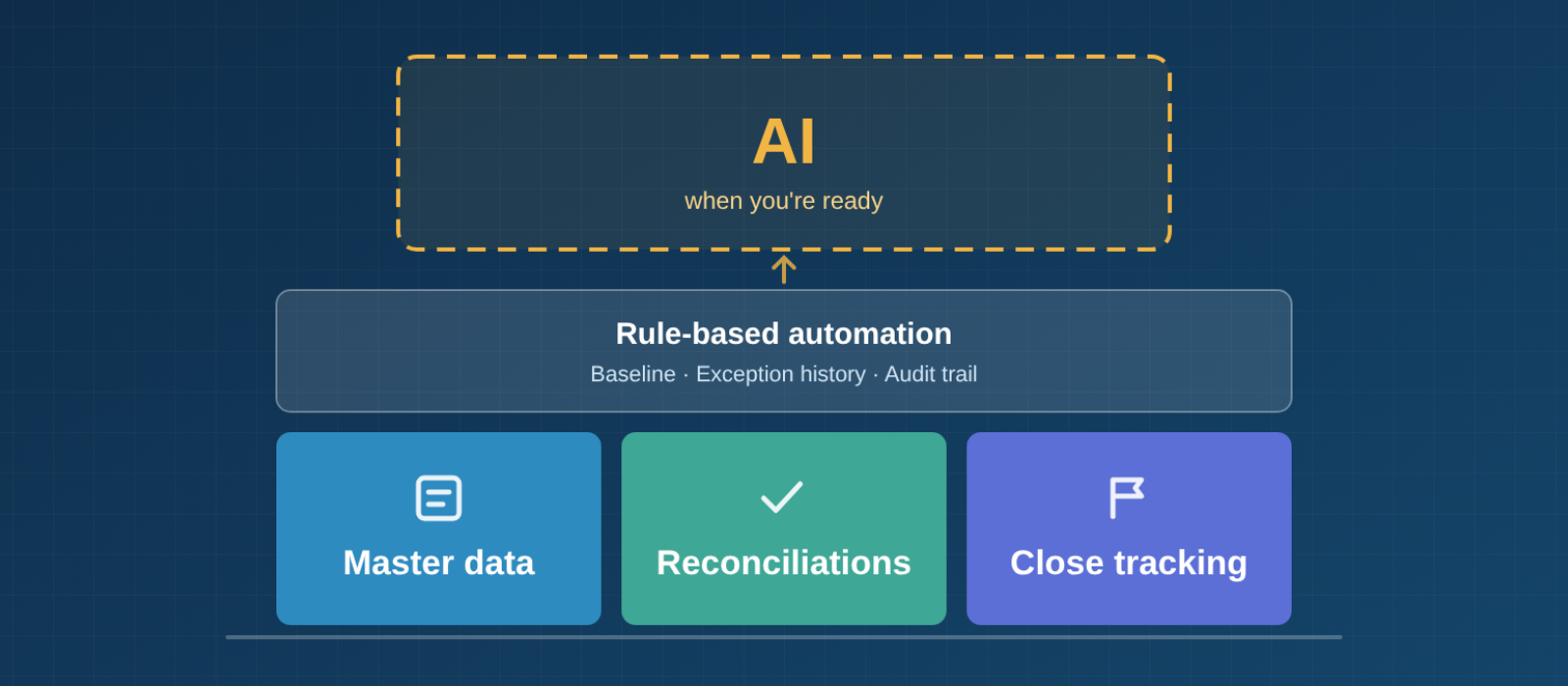
Each of these areas can be improved with rule-based automation, without any AI model.
Master data checks
Scheduled checks can flag duplicate suppliers, missing VAT or company numbers, inactive accounts that are still receiving postings, and changes to supplier bank details. Fixing these at source steadily raises the quality of the data any future AI tool will use. The bank details check also reduces fraud risk straight away.
Automated reconciliations
Bank and intercompany matching can be automated with clear matching rules, leaving the team to investigate only the items that don't match. Every unmatched item and how it was resolved is recorded, building up a history of exceptions.
Close tracking
Recording each period-end task in a workflow tool rather than a spreadsheet checklist, including who completed it and when, gives you a clear audit trail. It also shows how long each step really takes.
Use what you build to test AI later
The most valuable by-product of this automation is evidence. When you start evaluating AI tools, it gives you three things many organisations lack.
- A baseline. Time taken, match rates and error rates from your automated processes show where AI could add value, and give you something to measure it against.
- A test set. Your log of exceptions, and how each was resolved, is a ready-made set of real cases. You can run an AI tool against them and see how often it reaches the same answer as your team.
- A safe fallback. Because the rule-based process already works, you can run an AI tool alongside it before relying on it, and keep the rules in place as a control afterwards.
This changes the question from "Can we trust AI?" to "How does it perform on our data, compared with what we do today?" That is a much easier conversation to have with IT, audit and the finance team.
How we can help
At Positive8, we can review how ready your finance data and processes are for AI and help you decide which groundwork to automate first. As your AI plans develop, we can use your baseline and exception history to evaluate tools on your own data, so decisions rest on evidence rather than vendor demos.